
Insights
Container Shipping Terms Glossary: FCL, LCL, CY, CFS & More
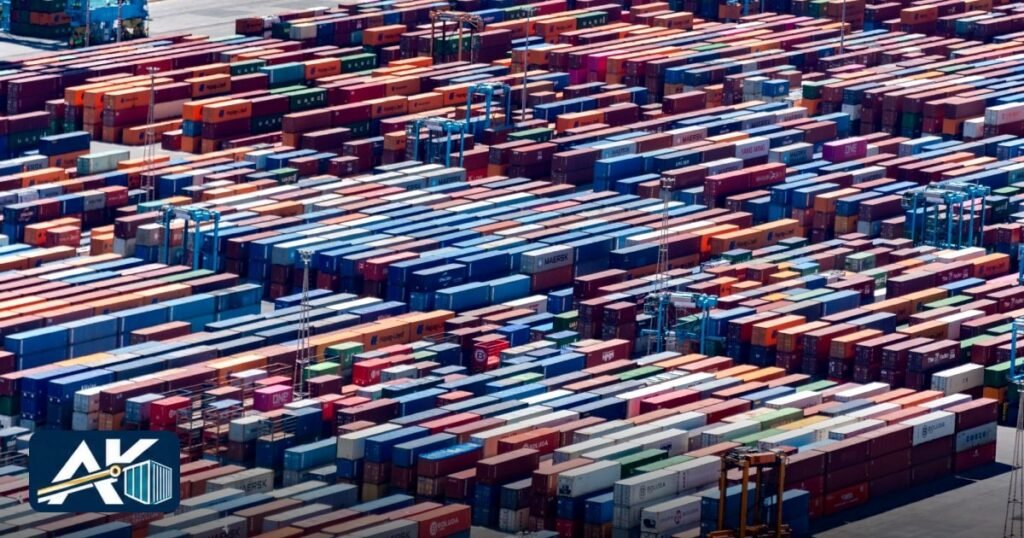
Understanding the language of container shipping is essential for any business that moves goods internationally. A clear glossary helps avoid costly misunderstand‑ings and streamlines communication with carriers, freight forwarders and customs agents. Below is a concise guide to the most common terms you will encounter.
What is a Container Shipping Glossary and Why It Matters
A container shipping glossary is a curated list of definitions for the terminology used throughout the freight‑forwarding process. It serves as a reference point for shippers, logistics managers and anyone involved in supply‑chain planning.
Having a shared vocabulary reduces the risk of errors such as mis‑routing, incorrect documentation or unexpected charges. When all parties speak the same language, negotiations become more transparent and contracts can be drafted with greater precision.
Moreover, a well‑maintained glossary supports training of new staff and aids in compliance with international regulations, which often require specific terminology on shipping documents. In short, it is a foundational tool for efficient, cost‑effective global trade.
Full Container Load (FCL): Definition and Key Benefits
Full Container Load, abbreviated FCL, refers to a shipment that occupies an entire container – whether 20‑foot, 40‑foot or a specialised size. The shipper has exclusive use of the container from the point of loading to the final destination.
Key benefits of FCL include:
- Reduced handling – the container is sealed once and opened only at the destination, minimising the chance of damage or loss.
- Predictable pricing – rates are calculated per container, making budgeting straightforward.
- Faster transit times – FCL shipments are often prioritised and may benefit from direct vessel routes.
- Enhanced security – fewer touch‑points mean lower exposure to theft or tampering.
FCL is particularly advantageous for high‑value goods, bulk commodities or when the volume of cargo justifies the cost of a dedicated container.
Less than Container Load (LCL): When and How to Use It
Less than Container Load (LCL) describes a shipment that does not fill an entire container. Instead, cargo from multiple shippers is consolidated into a single container at a Container Freight Station (CFS) before being loaded onto a vessel.
LCL is ideal for businesses with smaller order sizes, irregular shipment schedules or products that are not time‑critical. It allows you to pay only for the space you actually use, which can be more economical than booking a full container that would otherwise travel partially empty.
The process typically involves the following steps:
- Booking space with a freight forwarder who offers consolidation services.
- Delivering goods to the designated CFS, where they are palletised and labelled.
- Consolidation into a shared container, followed by loading onto the vessel.
- De‑consolidation at the destination CFS, where each shipper’s cargo is separated for final delivery.
While LCL offers flexibility, it may involve longer transit times due to the additional handling required for consolidation and de‑consolidation.
Container Yards (CY) vs. Container Freight Stations (CFS)
Both CY and CFS are critical nodes in the container supply chain, but they serve distinct functions. A Container Yard (CY) is a large, often port‑adjacent, storage area where empty and loaded containers are stacked, maintained and dispatched. A Container Freight Station (CFS), on the other hand, specialises in the consolidation and de‑consolidation of LCL cargo, as well as ancillary services such as customs clearance and cargo inspection.
| Aspect | Container Yard (CY) | Container Freight Station (CFS) |
|---|---|---|
| Primary Function | Storage and handling of full containers | Consolidation/de‑consolidation of LCL shipments |
| Typical Location | Near ports or major rail terminals | Within logistics parks or inland freight hubs |
| Key Services | Stacking, retrieval, container repairs | Palletising, labelling, customs documentation |
| Typical Users | Shipping lines, large importers/exporters | SMEs, freight forwarders handling LCL |
Understanding the distinction helps shippers decide where to deliver their cargo for optimal handling, cost efficiency and speed.
Understanding Incoterms in Container Shipping
Incoterms – the International Commercial Terms published by the International Chamber of Commerce – define the point at which responsibility for goods passes from the seller to the buyer. In container shipping they are essential for clarifying who arranges transport, who bears risk, and who pays duties. The most frequently used Incoterms for full‑container loads (FCL) and less‑than‑container loads (LCL) are EXW, FCA, CFR, CIF, DAP and DDP. Each term allocates costs such as loading, ocean freight, insurance and customs clearance differently, so selecting the appropriate Incoterm can have a material impact on total landed cost.
For example, under CFR (Cost and Freight) the seller pays for carriage to the destination port, but the buyer assumes risk once the goods cross the ship’s rail. By contrast, CIF (Cost, Insurance and Freight) adds mandatory marine insurance, offering the buyer additional protection without extra paperwork. When a transaction involves a container freight station (CFS) for LCL consolidation, the buyer often prefers FCA (Free Carrier) because it allows the seller to deliver the cargo to the CFS, after which the buyer takes control of onward handling.
Understanding these nuances helps both shippers and receivers draft contracts that reflect real‑world logistics, minimise disputes and ensure that the chosen Incoterm aligns with the chosen mode – whether the cargo moves directly from a container yard (CY) to the port of discharge or via a multimodal hub.
Common Conversion and Leasing Terminology
Container conversion and leasing have their own specialised vocabulary, reflecting the diverse ways in which a steel box can be repurposed or financed. Below is a concise checklist of the terms you are most likely to encounter when discussing conversions or lease agreements with AK Container Logistics.
- Dry Van – Standard, weather‑proof container used for general cargo.
- Reefer – Refrigerated unit equipped with a built‑in cooling system for temperature‑sensitive goods.
- High‑Cube – Container with an internal height of 9 ft 6 in, offering roughly 15 % more volume than a standard 8 ft 6 in box.
- Flat‑Rack – Container with collapsible sides, ideal for oversized or irregularly shaped cargo.
- Conversion Kit – Pre‑engineered components (e.g., doors, shelving, ventilation) that transform a standard box into a specialised unit such as a pop‑up shop or office.
- Operating Lease – Short‑to‑medium term agreement where the lessee uses the container without assuming ownership, typically with maintenance included.
- Finance Lease – Longer‑term arrangement that often culminates in an option to purchase the container at the end of the term.
When negotiating a lease, pay attention to clauses covering “maintenance responsibility”, “early termination fees” and “return condition”. For conversions, confirm whether the provider supplies a full “turn‑key” solution – design, fabrication and certification – or whether you will need to source certain components separately.
Verdict: Mastering the Glossary for Efficient Global Trade
Having a solid grasp of container shipping terminology is not merely academic; it translates directly into smoother operations, lower costs and fewer contractual surprises. By internalising the differences between FCL and LCL, recognising the roles of CY (container yard) and CFS (container freight station), and understanding the specific language of conversion and leasing, businesses can communicate more precisely with freight forwarders, terminal operators and leasing partners.
In practice, this knowledge enables you to select the most appropriate Incoterm for each transaction, negotiate lease terms that reflect actual usage patterns, and specify conversion requirements that meet regulatory standards without unnecessary re‑work. It also empowers you to audit documentation – such as the Bill of Lading, packing list and lease agreement – for consistency with the agreed terminology, thereby reducing the risk of disputes at the port of discharge.
Ultimately, a well‑rounded container shipping terms glossary acts as a common language across the supply chain. It aligns expectations, accelerates decision‑making and supports the strategic agility required to respond to market fluctuations, seasonal peaks or emerging trade routes. Mastery of this lexicon is therefore a cornerstone of efficient, cost‑effective global trade.
Frequently Asked Questions
What does FCL stand for in container shipping?
FCL stands for Full Container Load, meaning a single shipper occupies an entire container, offering cost efficiency and reduced handling.
When should I choose LCL over FCL?
LCL is ideal for smaller shipments that don’t fill a container, allowing you to share space and only pay for the volume used.
What is the difference between a CY and a CFS?
A CY (Container Yard) is a storage area for full containers, while a CFS (Container Freight Station) handles consolidation and de‑consolidation of LCL cargo.
How do Incoterms affect container shipping costs?
Incoterms define responsibility for freight, insurance and customs duties, influencing who bears each cost and risk during transport.
Are container conversions covered by standard shipping terms?
Conversions are usually treated as specialised services; they are not covered by basic shipping terms and require separate agreements.
← All container insights