
Insights
20ft vs 40ft Container Choose: Which Size Fits Your Cargo?
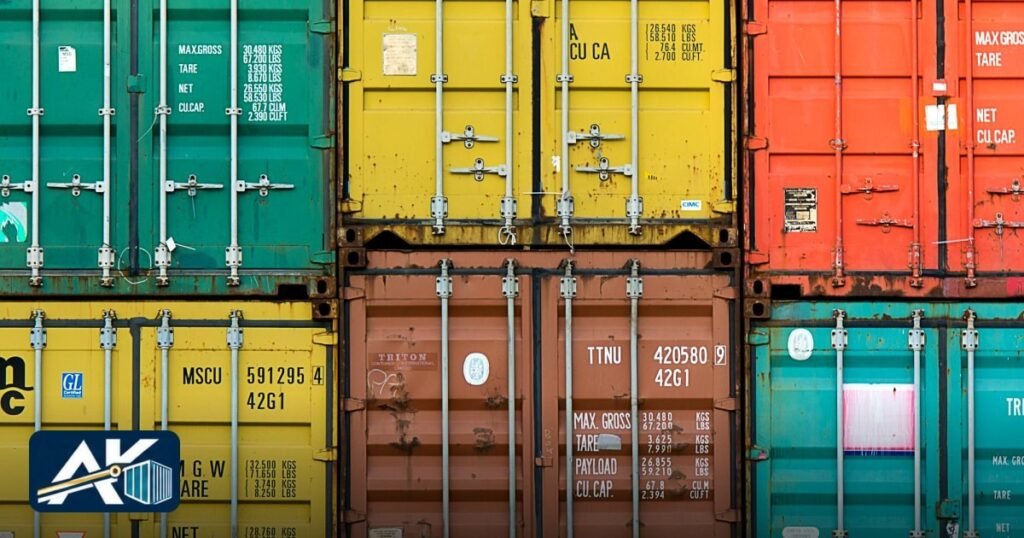
Choosing the right container size is a fundamental step in planning any international shipment. A clear understanding of your cargo’s physical characteristics, combined with an awareness of cost and operational factors, will ensure you select the most efficient solution.
Understanding Your Cargo Dimensions and Weight
Begin by measuring the longest, widest, and highest points of each item you intend to ship. Record these dimensions in centimetres or metres, and note the total weight of each piece. When items are irregularly shaped, consider the smallest rectangular box that can fully enclose them – this “bounding box” provides a realistic estimate of the space required.
Next, aggregate the individual measurements to determine the overall footprint of the shipment. If you are consolidating multiple pallets, calculate the combined length and width, remembering that pallets are typically 1.2 m × 1.0 m in Europe. For heavy machinery or bulk goods, the weight per cubic metre becomes a crucial metric, as it influences how much can be safely loaded without exceeding the container’s payload limit.
Finally, compare your totals against the internal dimensions of standard containers: a 20‑foot unit offers approximately 33 m³ of usable volume, while a 40‑foot unit provides roughly 67 m³. Knowing where your cargo sits relative to these capacities will guide the rest of your decision‑making process.
Assessing Load Volume vs. Load Weight
Containers are rated both by maximum gross weight (typically around 30 t for a 20‑foot and 32 t for a 40‑foot) and by internal volume. If your cargo is lightweight but bulky – for example, furniture or textiles – volume will be the limiting factor. In such cases a 40‑foot container often proves more economical because it reduces the number of trips required.
Conversely, dense cargo such as metal components or stone may reach the weight limit long before the space is filled. Here a 20‑foot container can be sufficient, provided the total weight does not exceed the permissible payload of roughly 28 t after accounting for the tare weight of the container itself.
When both volume and weight are close to the limits, calculate the weight‑to‑volume ratio (kilograms per cubic metre). A ratio above 400 kg/m³ generally indicates that weight, rather than space, will dictate the container choice.
Cost Implications of 20ft and 40ft Containers
Pricing structures for container hire, purchase, and freight are typically based on size, distance, and handling requirements. A 40‑foot container usually costs about 1.8‑2.0 times more than a 20‑foot unit, reflecting its larger volume but not a proportional increase in weight‑related charges.
Because freight charges are often calculated per cubic metre, the cost per unit of space can be lower with a 40‑foot container, especially on long‑haul sea routes. However, if your cargo fills only half of a 40‑foot box, you may be paying for unused capacity.
| Factor | 20‑ft Container | 40‑ft Container |
|---|---|---|
| Internal Volume | ≈ 33 m³ | ≈ 67 m³ |
| Maximum Gross Weight | ≈ 30 t | ≈ 32 t |
| Typical Hire Cost (per week) | Lower | Higher (≈ 1.9 × 20‑ft) |
| Freight Rate (per km) | Higher per m³ | Lower per m³ |
Beyond the direct container fee, consider ancillary costs such as loading equipment, customs handling, and inland haulage. A larger container may require specialised forklifts or a longer loading dock, which can add to the overall expense.
Operational Considerations: Handling, Transport and Storage
From a handling perspective, a 20‑foot container is more manoeuvrable in tight port yards and narrow warehouse aisles. Its shorter length reduces the turning radius of trucks and makes it easier to stack on standard trailers.
Transporting a 40‑foot unit often necessitates a longer chassis or a double‑stack arrangement on rail, which may not be available on all routes. Verify that your chosen carrier and inland logistics partners can accommodate the larger size without incurring surcharge fees.
Storage space at origin and destination is another practical factor. A 40‑foot container occupies roughly twice the floor area of a 20‑foot unit, which can strain limited yard space and increase dwell time if storage is scarce.
Finally, consider turnaround time. Loading a 40‑foot container typically takes longer, but the reduction in the number of containers required can streamline documentation and customs clearance, potentially offsetting the extra handling time.
Regulatory and Safety Requirements
When selecting a container, the first step is to confirm that the unit complies with the International Convention for Safe Containers (CSC) and any regional amendments that apply to your trade lane. Both 20‑foot and 40‑foot containers must bear a valid CSC plate, indicating they have passed structural integrity tests and are fit for repeated handling. In the United Kingdom and the EU, the Carriage of Dangerous Goods by Road (CDG) regulations also dictate specific ventilation and securing requirements for hazardous cargo, regardless of length.
Weight limits are another critical factor. A standard 20‑foot container is rated for a maximum gross weight of around 24 tonnes, while a 40‑foot unit typically allows up to 30 tonnes. Exceeding these limits can lead to penalties at ports and increase the risk of damage during loading, unloading, or road transport. Ensure that the tare weight of the container is subtracted from the cargo weight to stay within the permissible gross mass.
Finally, consider the loading equipment at your origin and destination. Some terminals only have reach‑stackers capable of handling 20‑foot containers, whereas larger gantry cranes are required for 40‑foot units. Verifying the compatibility of handling gear with local regulations helps avoid costly delays and safety incidents.
Impact on Supply‑Chain Efficiency and Lead Times
The choice between a 20‑foot and a 40‑foot container can have a measurable effect on overall supply‑chain performance. Larger containers reduce the number of handling moves per cubic metre of cargo, which can shorten dwell times in ports and warehouses. Fewer lifts mean lower exposure to handling damage and a smoother flow through customs inspections.
However, a 40‑foot container may not always be the most efficient option. If the shipment consists of multiple small‑batch items, the extra space can lead to under‑utilisation, raising the cost per cubic metre. In such cases, consolidating several 20‑foot units may provide better flexibility, allowing you to match container size to order volume and avoid empty space that inflates freight charges.
Lead times are also influenced by container availability. During peak seasons, 20‑foot containers are often more readily stocked at major ports, whereas 40‑foot units can experience longer allocation periods. Aligning container size with your inventory turnover rate helps maintain predictable delivery schedules and reduces the risk of bottlenecks.
Verdict: Choosing the Right Container Size for Your Business
Ultimately, the decision hinges on a balance of cargo dimensions, weight, regulatory compliance, and operational agility. Use the following checklist to guide your selection:
- Measure the longest, widest and highest points of the cargo.
- Calculate total weight and compare it with the gross‑weight limits of each container type.
- Confirm that the handling equipment at origin and destination can accommodate the chosen size.
- Assess whether the cargo will fill the container efficiently or leave significant void space.
- Check current container availability and any seasonal constraints at your ports.
- Consider the impact on freight rates – larger containers often lower the cost per unit volume, but only when fully utilised.
By systematically evaluating these factors, you can select the container that minimises cost, maximises safety, and aligns with your supply‑chain objectives, ensuring that your cargo arrives on time and in optimal condition.
Frequently Asked Questions
What factors should I prioritise when comparing a 20ft and 40ft container?
Focus on cargo dimensions, weight, handling requirements and total landed cost. A 20ft container is ideal for compact or heavy loads, while a 40ft container suits bulky, low‑density goods.
Is a 40ft container always more cost‑effective than a 20ft container?
Not necessarily. Although the cost per cubic metre is lower for a 40ft unit, you may pay extra for handling, storage and transport if you cannot fully utilise the space.
Can I combine different cargo types in a single 40ft container?
Yes, provided the combined weight does not exceed the container’s maximum payload and the cargo is safely secured to meet safety regulations.
How do port fees differ between 20ft and 40ft containers?
Port fees are generally higher for 40ft containers because they occupy more space and may incur additional handling charges, but the exact difference varies by terminal.
What are the key safety checks before loading a container?
Inspect the container for structural damage, ensure doors seal correctly, verify the tare weight, and confirm that the cargo is evenly distributed and properly secured.
← All container insights