
Insights
Open Top vs Flat Rack Container: Which Fits Your Cargo?
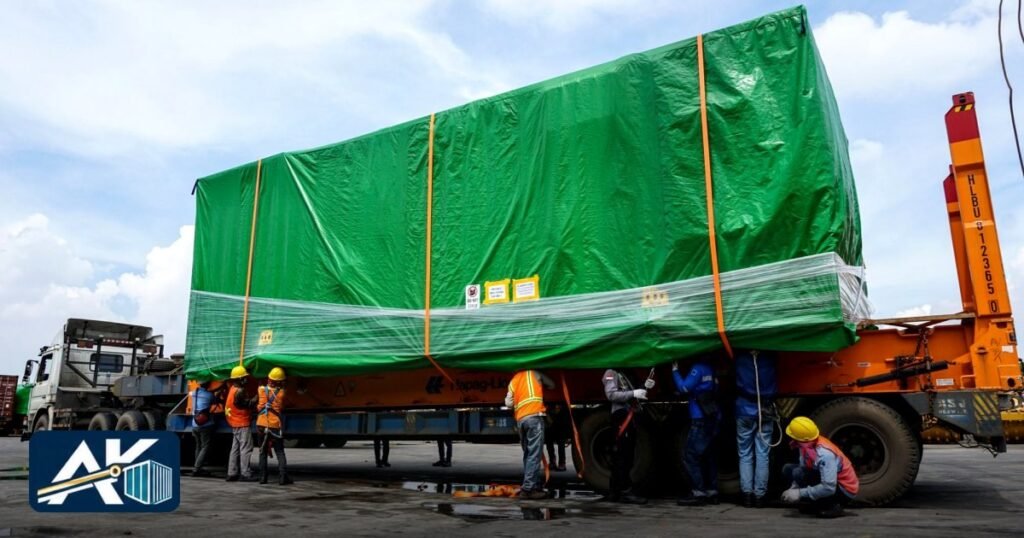
Choosing between an open top vs flat rack container is rarely a matter of preference. It is decided by the shape, weight and handling needs of the cargo. This guide explains how each box works, where a standard dry container still makes sense, and what to check before you commit.
A dry container is the default, but it has hard limits
The standard dry container is a closed steel box with a floor, two side walls, a roof, a fixed front end and double doors at the rear. It is the cheapest and most widely available option, it stacks easily on vessels and at depots, and it protects cargo from weather and, with proper locking, from casual theft.
Its limits are the internal dimensions and the door opening. Cargo that is taller than the doorway, wider than the interior or longer than the floor cannot be loaded, however carefully it is manoeuvred. Heavy machinery that has to be lifted in from above rather than pushed in through the door also falls outside what a dry box can do.
Before looking at special equipment, measure the cargo at its largest point, including any packaging, skids or crating, and compare it with the internal dimensions and door opening on the container’s specification sheet. If it fits with sensible clearance, a dry container is usually the simplest and most economical answer. If it does not, cargo is considered out of gauge and the choice moves to an open top or a flat rack.
An open top container keeps the walls but removes the roof
An open top container has a floor, solid side walls, a rear door frame and a front end, but no fixed roof. Instead it has removable roof bows and a tarpaulin that is fastened along the top rails. Many units also have swing-away door headers so that taller cargo can be loaded or unloaded without lifting everything over the header.
The key advantage is top loading. A crane or hoist can lower tall or heavy items straight in, which suits machinery, steel coils, long pipes, timber and bulky project cargo. Because the side walls are still there, the cargo is contained and partly protected, and lashing points on the floor and rails let you secure it in place.
An open top is a good fit when the cargo is too tall for the door but still within the width and length of the box. It is a poorer fit when anything must stick out beyond the walls, because the structure no longer protects it and the stowage planner will treat it as over-height or over-width.
- Suits cargo that is lifted in from above
- Offers wall protection and a weather cover when the tarpaulin is in good order
- Works for taller items that cannot pass through the door opening
- Needs a sound tarpaulin, bows and securing straps to stay weather-resistant
A flat rack container removes the walls entirely
A flat rack is a platform with a strong floor and end walls, which may be fixed or folding, and no side walls or roof. Cargo can be loaded from the sides, from above or by forklift, and it can overhang the platform within the limits set by the carrier and the route. This makes it the standard tool for the largest and heaviest items: construction equipment, large vehicles, boats, transformers and prefabricated structures.
The trade-off is exposure. Nothing protects the cargo from sea spray, rain or contact with neighbouring boxes except what you provide yourself, such as wrapping, covers or protective coatings. Lashing becomes more important, because the cargo is secured directly to the frame rather than being held by walls.
Flat racks also bring practical constraints. Overhanging cargo can block neighbouring slots on the vessel, so carriers often charge a premium or require a specific stowage position. Terminals and trucking companies need to know about the dimensions in advance, as the load may need special permits or escort arrangements on the road.
This comparison shows how the three types differ in use
The table below summarises the practical differences. Always confirm exact dimensions and payload with the specification of the particular unit you are offered, as they differ between manufacturers and lessors.
| Feature | Dry container | Open top | Flat rack |
|---|---|---|---|
| Roof | Fixed steel roof | Removable tarpaulin and bows | None |
| Side walls | Fixed steel walls | Fixed steel walls | None |
| Loading method | Through the rear doors | From above or through the doors | From above, sides or ends |
| Weather protection | Good when the box is sound | Depends on the tarpaulin | Only what you add |
| Overhanging cargo | Not possible | Over-height only, with care | Possible within carrier limits |
| Typical cargo | Palletised and boxed goods | Machinery, pipes, coils | Heavy equipment, vehicles, large structures |
| Relative availability | Widely available | More limited | Most limited |
Out-of-gauge cargo needs planning well before booking
Out-of-gauge shipments are planned, not simply booked. Carriers want to know the exact length, width, height, weight and centre of gravity, ideally with drawings or photographs. They will decide whether the cargo can sit on deck or under deck, and whether neighbouring slots must be left empty.
Think through the whole chain, not just the sea leg. The cargo has to be loaded at origin, trucked or railed to the port, handled by the terminal, discharged at destination and delivered onward. Each step may have its own equipment, permit and timing requirements, and a restriction at any one of them can change which container type is realistic. Our transport and logistics team can help you think through the movement end to end.
Check documentation early as well. Bills of lading for out-of-gauge cargo usually carry special remarks about dimensions and stowage, and the agreed Incoterms decide who arranges and pays for each stage. Misreading that split is a common source of disputes.
Condition, safety and securing matter as much as the type
Special equipment takes more wear than standard boxes, because heavy lifts, chains and forklifts all leave their mark. When buying or leasing, inspect floors for deformation, cracked welds and rust, check that lashing rings and corner castings are intact, and confirm that folding end walls on a flat rack move and lock properly. For open tops, ask to see the tarpaulin and roof bows, and check that the header swings and locks as intended.
Look for a valid safety approval plate and inspection record, and agree the condition grade in writing. Our guide to container condition grades explains the terms used in the trade, such as cargo-worthy and as-is, so you know what each description actually promises.
Securing the cargo is a safety issue for people as well as property. Use lashing equipment rated for the load, spread the weight over the floor as the specification allows, and follow recognised cargo-securing guidance. If you are unsure, involve a surveyor or a specialist packer; the cost of expert advice is small against the cost of cargo shifting at sea.
Verdict: match the box to the cargo, then buy or lease with the facts
If the cargo fits through the door of a dry container, use one. If it is too tall but fits within the walls, an open top is usually the right answer. If it is too wide, too long, too heavy to lift any other way, or must overhang, a flat rack is the only workable option. Many projects mix all three types across a single shipment.
Then decide how to hold the equipment. Leasing suits one-off projects, while buying makes sense if you will ship regularly or want to reuse the units for storage or site use afterwards. Compare the options through our buying and leasing guides, and send your cargo dimensions and weight with your enquiry so the right unit can be matched. When you are ready, request a quote for the equipment and we will come back with what is available.
Frequently Asked Questions
Can out-of-gauge cargo go in a dry container?
Only if it fits inside the internal dimensions and can pass through the door opening. Cargo that is too tall, too wide or too long for those limits needs an open top or a flat rack.
What is the main difference between an open top and a flat rack?
An open top keeps solid side walls and a floor but has no fixed roof, so cargo is loaded from above. A flat rack has no side walls at all, so cargo can overhang and be loaded from the sides or above.
Do open top containers need a tarpaulin?
Yes. They are normally closed with a removable tarpaulin over a roof bow system, and the condition of that cover matters for weather protection during the voyage.
Is lashing the buyer's responsibility?
Securing cargo is usually a shared matter between shipper, packer and carrier, defined by the contract and the applicable safe-stowage rules. Confirm responsibilities in writing before booking.
Can I buy or lease these container types?
Both are available through container traders and lessors, although stock of special equipment varies. Ask for a quote with your cargo dimensions and weight so the right unit can be matched.
← All container insights